
Coffee boosters for weight loss are everywhere on Aussie social feeds right now, and so are the questions: do they actually work, and what is really in them? Rather than another list of promises, this guide looks at what trusted sources say about the ingredients most boosters use, sorted into what is well established, what is promising and what is still unknown. Knowing the evidence helps you use a booster the right way.
The quick answer
A coffee booster can support a weight-management routine, but it works best as a helper, not a shortcut. The strongest evidence is for fibre (fullness and digestion) and caffeine (alertness). Plant extracts such as green tea, green coffee bean, carnitine and white kidney bean show small, modest effects in research, and mulberry leaf is an early but interesting area. Choose a booster with an open ingredient list and realistic claims, such as Akemi Coffee Boost, and pair it with sensible meals, movement and sleep.
What is a coffee booster?
A coffee booster is a powder you stir into the coffee you already drink. Most combine a little natural caffeine, one or two fibres and a handful of plant extracts. The appeal is obvious: no pills, no shakes, no new routine, just your usual flat white or long black doing a bit more. The question is which of those ingredients have real evidence behind them.
How to read the evidence
Health researchers usually sort findings into three levels, and it is a useful way to think about any supplement:
- Well established. Many good-quality studies agree, and official bodies include it in their advice.
- Promising. Studies show a benefit, but it is small, or the studies are few, short or small.
- Still unknown. Not enough research yet to say either way.
The US National Institutes of Health Office of Dietary Supplements (ODS) keeps one of the most thorough, plain-language summaries of weight-loss ingredients: its Dietary Supplements for Weight Loss fact sheet. We lean on it below, alongside Australian sources.
The evidence at a glance
| Ingredient | Evidence level | What trusted sources say |
|---|---|---|
| Fibre (psyllium, resistant dextrin) | Well established for fullness and digestion | Australian nutrient reference values recommend 25 g/day (women) and 30 g/day (men) |
| Caffeine | Well established for alertness; modest for weight | ODS: may help with a small amount of weight loss or less weight gain over time |
| Green tea extract | Promising, modest | Good-quality trials show a possible modest effect on body weight |
| Green coffee bean extract | Promising, modest | ODS: might help you lose a small amount of weight |
| L-carnitine | Promising, modest | ODS: might help you lose a small amount of weight |
| White kidney bean extract | Promising, early | A small number of trials suggest a modest effect; more research needed |
| Mulberry leaf extract | Early research | Studied mainly for after-meal blood sugar; weight effects not yet established |
Well established: fibre and caffeine
Fibre for fullness
Soluble fibres such as psyllium husk and resistant dextrin absorb water and slow digestion, which is why they help you feel fuller for longer. Fibre is also central to official advice here: the Australian nutrient reference values for dietary fibre set an adequate intake of 25 g a day for women and 30 g for men. Fibre in your morning cup is one more easy way to chip away at that target. Drink water alongside it, as fibre works best when you are well hydrated.
Caffeine for alertness
Caffeine reliably improves alertness, which helps on a sluggish morning or before a walk. Its effect on weight is modest: the ODS summarises it as possibly helping with a small amount of weight loss or less weight gain over time. The bigger win with coffee is usually what you leave out: a long black has next to no kilojoules, while a large syrupy latte can carry a snack’s worth (see our guide to black coffee for weight loss). Food Standards Australia New Zealand cites about 400 mg of caffeine a day as safe for most healthy adults.
Promising: the plant extracts
This is where most boosters differ, and where honest expectations matter most.
- Green tea extract. Its catechins have been studied in a number of good-quality trials, which show a possible modest effect on body weight.
- Green coffee bean extract. Rich in chlorogenic acids. The ODS notes it might help you lose a small amount of weight, while pointing out that studies are limited.
- L-carnitine. Your body uses it to move fats into cells to be burned for energy. The ODS says supplements might help you lose a small amount of weight.
- White kidney bean extract. Known as a “carb blocker” because it works on the enzyme that breaks down starch. A small number of trials suggest a modest effect; more research is needed.
- Mulberry leaf extract. Its natural compound DNJ has been studied mainly for how it slows sugar absorption after meals. It is an interesting early area rather than a proven weight-loss ingredient.
The pattern is clear: each extract on its own offers a small nudge. That is exactly why well-designed boosters combine several of them with fibre, and why they are designed to support a routine rather than replace one.
Still unknown
Most research looks at one ingredient at a time, often in capsule form and over a few months. There is far less research on specific combinations, on how they behave in a hot coffee, or on effects over several years. Independent consumer advocates such as CHOICE make the same point about weight-loss supplements generally. The sensible takeaway is not to avoid boosters, but to choose one that is honest about what it does and to give it a fair go as part of a routine.
How to use the evidence when you choose a booster
- Read the full ingredient listYou should be able to recognise every ingredient. Look for fibre plus well-studied extracts.
- Check the caffeineA modest amount (around 30 mg, as in Akemi) is easy to fit into your day; a big dose on top of three coffees is not.
- Look for realistic claims“Supports fullness and cravings” is what the evidence allows. “Lose 10 kg in a month” is not.
- Check the price and the guaranteeA one-off purchase with a money-back guarantee lets you try it without risk.
- Pair it with the basicsProtein and fibre at brekkie, a daily walk and enough sleep. Our guide on what to add to coffee for weight loss has easy ideas.

Our recommendation: Akemi Coffee Boost
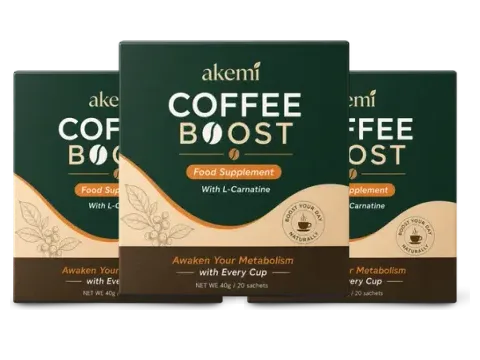
If you want a coffee booster that lines up with what the evidence actually supports, Akemi Coffee Boost is the option we recommend. It leads with the best-supported ingredient, fibre, adds the well-studied plant extracts in one flavourless sachet, and makes realistic claims about supporting fullness, cravings and steady energy. Ordering from Australia or New Zealand? Our Akemi Coffee Boost Australia buying guide covers prices, delivery times and how to order safely.
- Fibre first. Psyllium husk and resistant dextrin to help you feel fuller for longer.
- Well-studied extracts. Green tea, green coffee bean and L-carnitine to support a healthy metabolism; white kidney bean and mulberry leaf to support steadier blood sugar after meals.
- Gentle caffeine. About 30 mg of natural caffeine per sachet, so it barely changes your daily total.
- Your flat white stays a flat white. Flavourless and odourless; it also dissolves in a long black, an iced coffee, tea or water.
- Simple pricing. On the official Australia & New Zealand order page: 1 box $29.99, 2 boxes $49.98 ($24.99 each) or 3 boxes $59.97 ($19.99 each, about a dollar a day). A one-off purchase with no subscription; shipping calculated at checkout.
Customers rate it 4.8/5 across 3,758 reviews, 96.8% say they would recommend it, and every order comes with a 30-day money-back guarantee. The only small catch: it is sold only on the official website, and like any daily habit it shows its best after a few weeks of consistency.
If you are pregnant, breastfeeding, sensitive to caffeine, taking medication or managing a health condition, talk to your GP before adding any supplement to your routine.
Frequently asked questions
Do coffee boosters for weight loss work?
They can support a weight-management routine, but they are not a stand-alone solution. Fibre for fullness is well established, and ingredients such as green tea, green coffee bean, carnitine and white kidney bean show small, modest effects in research. The best results come when a booster is paired with sensible meals, movement and sleep.
What is the best-supported ingredient in a coffee booster?
Fibre. Soluble fibres such as psyllium help you feel full and support healthy digestion, and Australian nutrient reference values recommend an adequate intake of 25 g of fibre a day for women and 30 g for men. Caffeine for alertness is also very well established.
Is a coffee booster safe?
For most healthy adults, a booster with a modest amount of caffeine taken as directed is a simple addition to the day. Count its caffeine with your other drinks, and talk to your GP first if you are pregnant, breastfeeding, under 18, on medication or managing a health condition.
How much caffeine is too much?
Food Standards Australia New Zealand cites about 400 mg a day as safe for most healthy adults and about 200 mg a day for pregnant women. One sachet of Akemi Coffee Boost adds roughly 30 mg of natural caffeine.
How can I tell a trustworthy coffee booster from hype?
Look for a full ingredient list, a stated caffeine amount, realistic claims (support, not miracles), clear pricing with no hidden subscription and a money-back guarantee. Be wary of products that promise rapid kilos or use celebrity or TV endorsements you cannot verify.
Prefer a coffee booster built on ingredients you can actually read about? Akemi Coffee Boost lists all 7 openly, with a 30-day money-back guarantee.