
Australians take their coffee seriously, and plenty of people trying to lose a few kilos wonder whether switching to black is worth it, or whether coffee is quietly working against them. So, is black coffee good for weight loss? Here is the straight answer, the reasons behind it and how to make your daily cup work harder, especially now that summer is here.
The quick answer
Yes, black coffee is one of the best drinks you can have when you are losing weight, mainly because a long black or short black has next to no kilojoules. Its natural caffeine can also lift your energy and take the edge off hunger for a while. What it will not do is burn fat on its own: the benefit comes from what you are not drinking (milk, syrups, sugar) and from the steadier routine it helps you keep.
Why black coffee helps: the kilojoule maths
A long black is basically espresso and hot water. Food composition data used in Australia puts it at only a handful of kilojoules per cup. Compare that with what usually goes into a coffee order:
| Your order | What adds the kilojoules | Weight-loss verdict |
|---|---|---|
| Long black / short black / espresso | Almost nothing | Best everyday choice |
| Piccolo or macchiato | A small splash of milk | Good middle ground |
| Regular flat white or latte | A full cup of milk | Fine once a day; choose size and milk wisely |
| Iced coffee with ice cream and cream | Milk, ice cream, cream, syrup | Closer to a dessert; keep for a treat |
| Sugar in any coffee | Each teaspoon adds about 70 kJ | Cut back gradually |
That is the real reason black coffee helps. If you drink two or three milky, sweetened coffees a day, switching most of them to black can save a meaningful amount of energy every single day without feeling like you are on a diet. We break down the swaps in our guide to how to stop putting sugar in your coffee.
Want to see how every common order stacks up? We scored eight of them, from the long black to the café-style iced coffee, in our ranking of the best coffee for weight loss.
What black coffee can do
- Replace higher-kilojoule drinks. The simplest win, and it adds up over weeks.
- Lift energy. Caffeine helps you feel more alert, which can make a walk, a swim or a gym session more likely.
- Take the edge off hunger for a while. Many people find a coffee after a meal helps close the kitchen. The effect is modest and short-lived, so it works best alongside meals that contain protein and fibre.
- Give you a ritual. A daily cup is an anchor habit, and anchor habits are where new healthy habits stick best.
What black coffee cannot do
- Burn fat by itself. Caffeine slightly and briefly increases the energy you use, but not enough to outrun a poor diet.
- Target belly fat. No food or drink does that.
- Cancel the banana bread. A long black with a large slice of banana bread is still a big snack. The pastry is usually the real problem, not the coffee.
- Replace sleep. Too much late coffee costs sleep, and short sleep makes cravings stronger the next day.
How much black coffee is too much?
Food Standards Australia New Zealand cites about 400 mg of caffeine a day as safe for most healthy adults, and about 200 mg for pregnant women. Cafe coffee varies a lot in strength, so think of three to four cafe-style coffees as the upper end for most people, and fewer if you are sensitive. If you notice jitters, a racing heart or poor sleep, cut back. Our guide to the signs you are drinking too much coffee covers what to watch for.
A summer note for Aussies and Kiwis
It is summer down here, which means more iced coffees and more time in the heat. Coffee counts towards your fluids, but on hot days drink plenty of water as well, especially if you exercise outdoors. And if you love an iced coffee, an iced long black or a cold brew over ice keeps the refreshment without turning your coffee into a milkshake. See our guide: is iced coffee good for weight loss?
Five ways to make your black coffee work harder
- Pair it with proteinEggs, Greek yoghurt or a handful of nuts with your morning cup keep you fuller than coffee alone.
- Time itMorning and early arvo coffees fit best; keep the late ones decaf.
- Make it your after-meal signalA long black after lunch can replace the habit of a sweet treat.
- Walk to get itTurn the cafe run into a 15-minute walk and you have added movement for free.
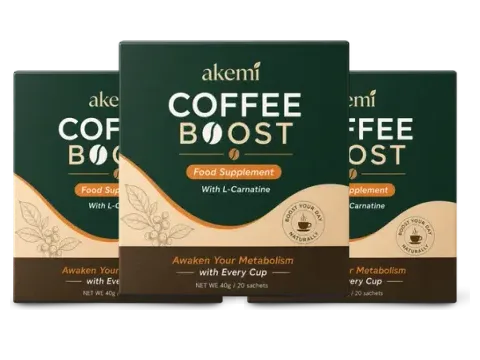
- Add fibre, not sugarIf plain black feels like too little, a flavourless booster such as Akemi Coffee Boost adds fibre and plant extracts without changing the taste.
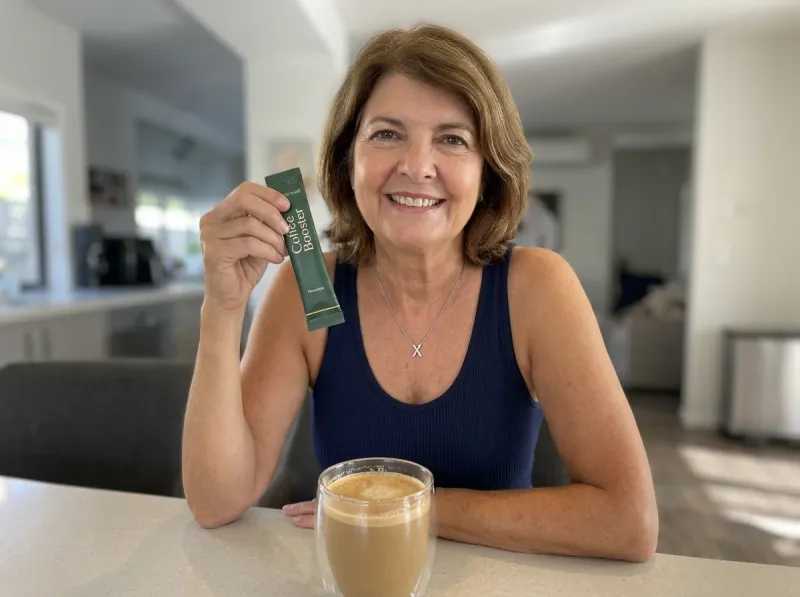
Our recommendation: Akemi Coffee Boost
Black coffee is already a smart choice. If you want that same cup to give you a little more help with fullness and cravings, Akemi Coffee Boost is the option we recommend. It was made for exactly this habit: one flavourless sachet stirred into the coffee you already drink, with nothing new to remember.
- Fibre for fullness. Resistant dextrin and psyllium husk help you feel fuller for longer, the thing black coffee alone only does briefly.
- Support for steadier energy. Mulberry leaf, green coffee bean and white kidney bean extracts are included to support steadier blood sugar after meals, with green tea extract and L-carnitine to support a healthy metabolism.
- Your long black stays a long black. Flavourless and odourless; it also dissolves in a flat white, an iced coffee, tea or water.
- Gentle. Only about 30 mg of natural caffeine per sachet, so it barely changes your daily caffeine total.
- Simple pricing. On the official Australia & New Zealand order page: 1 box $29.99, 2 boxes $49.98 ($24.99 each) or 3 boxes $59.97 ($19.99 each, about a dollar a day). A one-off purchase with no subscription; shipping calculated at checkout.
Customers rate it 4.8/5 across 3,758 reviews, 96.8% say they would recommend it, and every order comes with a 30-day money-back guarantee. The only small catch: it is sold only on the official website, and like any daily habit it shows its best after a few weeks of consistency.
If you are pregnant, breastfeeding, sensitive to caffeine, taking medication or managing a health condition, talk to your GP before adding any supplement to your routine.
Frequently asked questions
Is black coffee good for weight loss?
Yes, as a drink choice. A long black or short black has next to no kilojoules, so swapping a milky, sugary coffee for black saves energy every day without feeling like a diet. Its natural caffeine can also give your energy a lift. On its own, though, black coffee does not melt fat; it helps when it is part of a sensible eating routine.
How many cups of black coffee a day is OK?
Food Standards Australia New Zealand cites about 400 mg of caffeine a day as safe for most healthy adults, which is roughly three to four cafe-style coffees depending on the strength. Pregnant women are advised to stay at about 200 mg or less. Keep coffee to the morning and early arvo so it does not cost you sleep.
Does black coffee burn belly fat?
No drink targets belly fat. Caffeine gives a small, short-lived lift to energy use, but belly fat comes off the same way as fat anywhere else: a steady kilojoule deficit, enough protein and fibre, movement and good sleep.
Is a long black better than a flat white for weight loss?
A long black has a handful of kilojoules; a flat white adds the energy of the milk, which can be several hundred kilojoules for a regular full-cream cup. If you love a flat white, a smaller size or skim milk is a reasonable middle ground. If you drink several coffees a day, making most of them black adds up.
Should I drink black coffee before or after a meal?
Either is fine for most people. Some find a coffee after a meal takes the edge off a sweet craving. If coffee on an empty stomach upsets you, have it with or after brekkie.
Want your long black to do more than wake you up? One flavourless sachet of Akemi Coffee Boost adds fibre and plant extracts without changing the taste.