
You already know your morning flat white is non-negotiable. But if you are trying to lose a few kilos, you might wonder whether when you drink it makes a difference. The short version: timing will not make or break your progress, but getting it right can give you more energy, fewer cravings and better sleep — three things that make weight management a whole lot easier.
The quick answer
For most people the best time to drink coffee for weight loss is in the morning, with or shortly after brekkie, plus an optional cup 30–60 minutes before exercise. Have your last cup in the early arvo so caffeine does not mess with your sleep. And remember that what you put in the cup matters more than the clock.
Why coffee timing matters at all
Coffee on its own is almost kilojoule-free, and its natural caffeine helps you feel alert and energetic. That energy can make it easier to get moving, stay focused and skip the 10 am trip to the bakery. But caffeine stays in your system for hours. Drink it at the wrong time and it can cut into your sleep — and a short night is one of the most reliable ways to wake up hungrier and craving sweet things.
So the goal is simple: get the lift when it helps you, and let it wear off before bed.
The best (and worst) times to drink coffee
| When | Why it helps | Tip |
|---|---|---|
| With or after brekkie | Steady energy for the morning, pairs well with protein | Eggs or yoghurt alongside keep you full until lunch |
| Mid-morning | Helps you push past the urge to snack | Skip the muffin that comes with the café order |
| 30–60 min before a workout | More energy and motivation to train | A long black or espresso is enough |
| Early arvo | Fine for most people as a last cup | Make it your cut-off point |
| Late arvo and evening | Can disrupt sleep, which tends to increase cravings | Switch to decaf or herbal tea |
Morning coffee: the sweet spot for most people
Your morning cup is where you get the most benefit for the least effort. It is a habit you already have, so anything you add to it happens automatically, every day. Some people like coffee straight out of bed; others prefer to wait until they have eaten. If coffee on an empty stomach leaves you jittery or queasy, have it with a protein-rich brekkie — you will likely stay fuller for longer, too.
The biggest morning mistake is not the timing, it is the order. A large flavoured latte or iced coffee with syrup and cream can carry as much sugar as a dessert. Our guide on what to put in your coffee to lose weight covers the smart swaps.
Coffee before exercise
If you train, a coffee about half an hour to an hour beforehand is a popular move for good reason: caffeine can make a session feel easier and help you push a bit harder. A 2021 study from the University of Granada in Spain found that taking caffeine around 30 minutes before aerobic exercise increased fat burning during the workout, with a bigger effect in the afternoon than in the morning. It is a nice bonus — but the workout itself is what counts, so do not skip the session just because you missed the coffee.
The arvo cut-off
The 3 pm slump is real, and a second coffee can feel like the answer. If you do have one, keep it in the early arvo. A common rule of thumb is to stop caffeine around six hours before bed. Push it later and you may fall asleep fine but sleep more lightly, wake up tired and spend the next day fighting sugar cravings. Not sure whether you have crossed the line? Check these signs you are drinking too much coffee.
How much coffee per day?
- For most healthy adults: one to three regular cups spread across the morning and early arvo is a comfortable range.
- If you are sensitive to caffeine: one cup in the morning, then switch to decaf.
- If you are pregnant or breastfeeding, take medication or have a health condition: talk to your GP about what is right for you.
Make your morning cup work harder
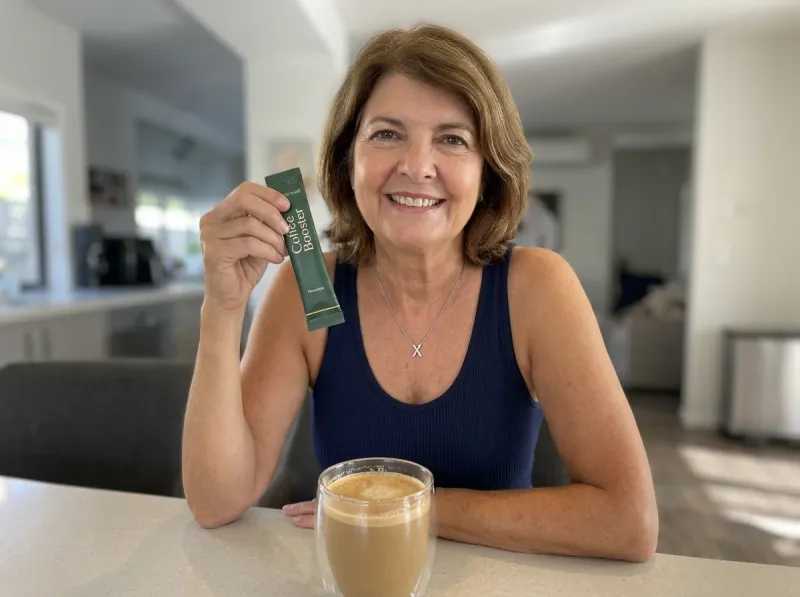
Once you have nailed the timing, the simplest upgrade is to make that one morning coffee do more than wake you up. That is what Akemi Coffee Boost is designed for: a flavourless, odourless sachet you stir into your flat white, long black or iced coffee once a day.
Our recommendation: Akemi Coffee Boost
If you have settled on a morning coffee as your main cup, Akemi Coffee Boost is the option we recommend to get the most out of that timing. It was made for exactly this moment: the first coffee of the day, when a little fullness support and steadier energy help you sail past the 10 am bakery run and keep the arvo slump in check — all without adding enough caffeine to push back your cut-off time.
Each sachet combines 7 plant-based ingredients: white kidney bean (a well-known carb blocker), mulberry leaf and green coffee bean (to support steadier blood sugar after meals), green tea and L-carnitine (metabolism support), plus resistant dextrin and psyllium (fibre to help you feel full). With only about 30 mg of natural caffeine, it barely changes your daily caffeine total — so your timing plan stays intact.
Because it goes into the cup you already drink every morning, there is nothing new to remember. Customers rate it 4.8/5 across 3,758 reviews, and the comment we see most is that the coffee tastes exactly the same. Marian: “Completely tasteless. I added it to my usual morning americano and my hunger was cut in half.”
On the official Australia & New Zealand order page, prices are: 1 box $29.99, 2 boxes $49.98 ($24.99 each) or 3 boxes $59.97 ($19.99 each, about a dollar a day). It is a one-off purchase with no subscription, shipping is calculated at checkout, and every order comes with a 30-day money-back guarantee. The only small catch: it is sold only through the official website, and like any daily habit it can take a few weeks to show its full effect. Get the full overview on our home page.
Still weighing up your options? Our comparison of coffee boosters vs. diet pills vs. keto shows which approach is easiest to stick with long term, and if your coffee comes from a jar rather than a barista, see instant vs barista coffee for weight loss.
Frequently asked questions
What is the best time of day to drink coffee for weight loss?
For most people it is the morning, with or shortly after brekkie, plus an optional cup about 30–60 minutes before a workout. That gives you energy when you need it and keeps caffeine well away from bedtime, which matters because poor sleep tends to increase cravings.
Should I drink coffee on an empty stomach?
Many people do and feel fine. If coffee on an empty stomach makes you jittery or gives you an upset tummy, have it with or after a protein-rich brekkie instead. Either way, it is what you add to the cup that makes the biggest difference.
What time should I stop drinking coffee?
A common rule of thumb is to have your last cup in the early arvo, roughly six hours before bed. If you are sensitive to caffeine, make your cut-off even earlier.
Does drinking coffee before exercise help burn fat?
Caffeine before a workout can help you feel more energetic and push a little harder, and some research suggests it can increase fat burning during aerobic exercise. It is a helpful extra, not a replacement for regular movement and good food.
How much coffee is too much?
Food safety authorities such as the European Food Safety Authority consider up to 400 mg of caffeine a day safe for most healthy adults, and up to 200 mg a day during pregnancy. A sachet of Akemi Coffee Boost adds only about 30 mg. If you have a health condition or take medication, check with your GP.
Got your timing sorted? Make that morning cup count with one Akemi Coffee Boost sachet — a one-off purchase with a 30-day money-back guarantee.