
Most weight-loss plans fall over on a Tuesday, somewhere between a late meeting and an empty fridge. Meal prep fixes that, but “spend your whole Sunday cooking” is not a plan most people stick with. So here is a lighter version: a 48-hour weekend plan split into small blocks on Saturday and Sunday, so you walk into Monday with lunches in the fridge, a shopping routine and a morning habit that keeps the arvo cravings quiet.
The quick answer
Meal prep for weight loss works best when it is small and repeatable: plan 4–5 weekday lunches on Saturday morning, shop on Saturday arvo, cook one protein, one grain and one tray of roast veg on Sunday, and portion them using the half veg, quarter protein, quarter wholegrain rule. Keep Monday to Wednesday in the fridge, freeze the rest, and set up a coffee station so your morning cup helps with cravings too. It will not change the scale in 48 hours; it makes the next weeks far easier.
Why meal prep helps with weight loss
Meal prep is not magic. It simply removes the moments where you are hungry, rushed and surrounded by easy options. When lunch is already in a container, the food court, the servo pie and the 3 pm vending machine lose most of their pull. It also makes portions visible: you decide how much goes into the container while you are calm and full, not when you are starving at 1 pm.
The Australian Dietary Guidelines recommend plenty of vegetables, wholegrains and lean protein, and meal prep is the most practical way to actually eat that way on a working day. Healthdirect describes a realistic weight-loss pace as about 0.5 to 1 kg per week, so think of this weekend as building the system, not chasing a number.
Before you start: what you need
- 8–10 containers with lids (glass or BPA-free plastic), ideally the same size so they stack
- Two oven trays, a large saucepan and a big mixing bowl
- Masking tape and a marker to write the day on each lid
- A notebook or phone note for your starting point and shopping list
- About 3–4 hours across the weekend, split into short blocks
Saturday: plan, shop and set up
Saturday morning (about 8–10 am): check and plan
- Note your starting point. Weight, waist measurement and one line about how your energy and cravings have been. That is your baseline for the weeks ahead, not a verdict.
- Clear one shelf in the fridge. Toss anything past its best and make room for the containers.
- Check the pantry. Rice, quinoa, tinned legumes, tinned tomatoes, spices, olive oil: tick off what you already have.
- Pick your formula. One protein, one grain, one tray of roast veg and one salad base. Two flavour options (say, lemon-herb and a mild curry) keep the week from getting boring.
Saturday arvo (about 1–3 pm): shop
Shop once, with a list, after lunch (never hungry). A simple Aussie trolley for five lunches:
| Group | Example | Why |
|---|---|---|
| Protein | 1 kg chicken thigh or breast, a tray of eggs, 1–2 tins of chickpeas or lentils | Keeps you full; easy to batch cook |
| Wholegrains | Brown rice, quinoa or wholemeal pasta | Slow, steady energy for the arvo |
| Roast veg | Pumpkin, sweet potato, zucchini, capsicum, broccoli, red onion | Fills half the container for few kilojoules |
| Salad base | Baby spinach, cherry tomatoes, cucumber, carrot | Crunch and colour that holds up to day three |
| Flavour | Lemons, garlic, Greek yoghurt, herbs, a jar of salsa | Taste without heavy sauces |
| Snacks | Fruit, plain nuts, carrot sticks, tubs of yoghurt | Ready-made answers for 3 pm |
Need more ideas for each aisle? Our weight-loss grocery list for Australia goes aisle by aisle.
Saturday evening: set the routine
This is the part most meal-prep guides forget. A container covers lunch, but it does nothing for the craving that hits two hours later. Set up a coffee station: mugs, your plunger or pods, and a sachet of Akemi Coffee Boost lined up next to the kettle, so tomorrow’s first coffee comes with soluble fibre for fullness. If you have not ordered yet, this is the moment: the order takes two minutes, and the habit starts the morning your box arrives. Then set a phone reminder for Sunday’s cooking block and get to bed at a decent hour.
Sunday: cook, portion and prepare Monday
Sunday morning (about 9–11 am): batch cook
- Oven on (200 °C). Chop the roast veg, toss with a little olive oil and spread over two trays. Roast 30–40 minutes.
- Grain on the stove. Cook enough rice or quinoa for five portions.
- Protein next. Bake or pan-cook the chicken with lemon and herbs; boil six eggs while the oven is on.
- Wash and dry the salad. Keep dressings separate so leaves stay crisp.
Sunday arvo (about 2–3 pm): portion and label
Let everything cool, then build each container: half veg or salad, a quarter protein, a quarter wholegrain, plus a spoon of yoghurt or salsa. Write the day on each lid. Food safety advice in Australia generally recommends eating refrigerated cooked leftovers within two to three days, so:
| Container | Where it goes | When to move it |
|---|---|---|
| Monday, Tuesday, Wednesday | Fridge | Ready to grab |
| Thursday, Friday | Freezer | Move to the fridge the night before |
| Snack boxes | Fridge door | Pack one each morning |
Sunday evening: set up Monday
- Put Monday’s container and a snack box in the front of the fridge.
- Check the coffee station: sachet, mug, coffee. Your morning takes three seconds longer, not thirty minutes.
- Fill a water bottle and leave it next to your keys.
- Write tomorrow’s one goal in your note: “Eat the lunch I packed, coffee before 2 pm, walk after lunch.”
What to do on Monday (and the rest of the week)
Monday is simple: breakfast at home, your coffee with a sachet, the lunch you packed, a short walk after eating. That is it. On Wednesday night, move Thursday’s container from the freezer to the fridge. On Friday, jot down two things: what worked and what you would change. Next weekend you repeat the same plan in less time, because the list is already written and the containers are already in the cupboard.
If you want more ways to keep the habit going, read our guide to healthy swaps for weight loss and our ranking of the best coffee for weight loss.
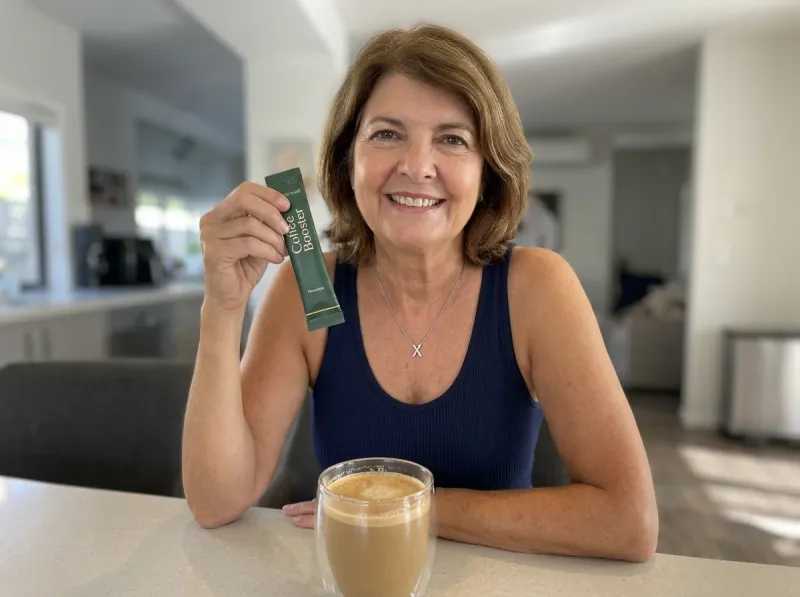
Our recommendation: Akemi Coffee Boost
Meal prep takes care of what you eat at lunch. Akemi Coffee Boost is the piece we recommend for everything in between: the morning coffee that keeps you fuller, and the arvo slump that usually ends at the biscuit tin. It was made exactly for people who want a weight-management habit that fits a busy week.
- Fibre for fullness. Psyllium husk and resistant dextrin help you stay satisfied between your prepped meals.
- Steadier blood sugar. White kidney bean and mulberry leaf support you after carb-heavy meals, so cravings have less pull.
- Gentle energy. Green tea, green coffee bean and L-carnitine, with only about 30 mg of natural caffeine per sachet.
- Zero effort. Flavourless and odourless, it dissolves in a flat white, long black, instant coffee, tea or water.
On the official Australia & New Zealand order page: 1 box $29.99, 2 boxes $49.98 ($24.99 each) or 3 boxes $59.97 ($19.99 each, about a dollar a day). It is a one-off purchase with no subscription, shipping is calculated at checkout and every order has a 30-day money-back guarantee. Customers rate it 4.8/5 across 3,758 reviews.

As always, if you are pregnant, breastfeeding, taking medication or managing a health condition, talk to your GP before adding any supplement to your routine. This article is general information and does not replace advice from your GP or an accredited practising dietitian.
Frequently asked questions
How do I start meal prep for weight loss?
Start small: plan four or five weekday lunches, not every meal. Use one weekend block to shop and one to cook a protein, a grain and a big tray of roast veg, then portion them into containers. Build from there once it feels easy.
How long does meal prep last in the fridge?
Food safety advice in Australia generally suggests eating refrigerated cooked leftovers within two to three days. Keep Monday to Wednesday meals in the fridge and freeze the Thursday and Friday portions, then move them to the fridge the night before.
What should a weight-loss meal prep container look like?
A simple guide is half the container vegetables or salad, a quarter lean protein (chicken, fish, tofu, eggs or legumes) and a quarter wholegrain carbs such as brown rice, quinoa or wholemeal pasta, plus a little healthy fat.
Do I have to meal prep every meal?
No. Lunches are where most people gain the most, because that is when the servo, the food court or the vending machine wins. Breakfast can be a quick routine at home and dinner can stay flexible.
Can I lose weight in a weekend?
Not in any meaningful way, and that is not the point of this plan. The weekend is for setting up your kitchen, your shopping and your routine so the next weeks are easier. Healthdirect suggests about 0.5 to 1 kg a week as a realistic pace.
Where does Akemi Coffee Boost fit into meal prep?
It covers the part a container cannot: the arvo craving. Keep the sachets next to the kettle or coffee machine so your morning coffee comes with soluble fibre for fullness, and your prepped lunch carries you through to dinner.
Prepped lunches handle the meals; one sachet in your morning coffee handles the cravings in between.